Lazio Region (DTC), Capitoline Superintendency for Cultural Heritage
Le Porte del Celio – Le Chiavi della Città
App, Brand Identity, Augmented reality, 360° photosphere, Communication, Portal, UI design, 3D modelling
Between millenary maps, augmented reality, interactive content and engaging storytelling, Le Porte del Celio redefines the way history is experienced and invites visitors to discover Rome and Lazio with new eyes. An innovative project that brings together the Museo della Forma Urbis di Roma and the Musei Civici di Albano Laziale, transforming them into a digital and immersive journey.
Funded by the bando DTC Lazio and promoted by the Sovrintendenza Capitolina, the project sees Dot Beyond alongside MosaicoGroup and PuntoRec Studios in the implementation of cutting-edge technologies that combine innovation and philological rigor.
AR and treasure hunt
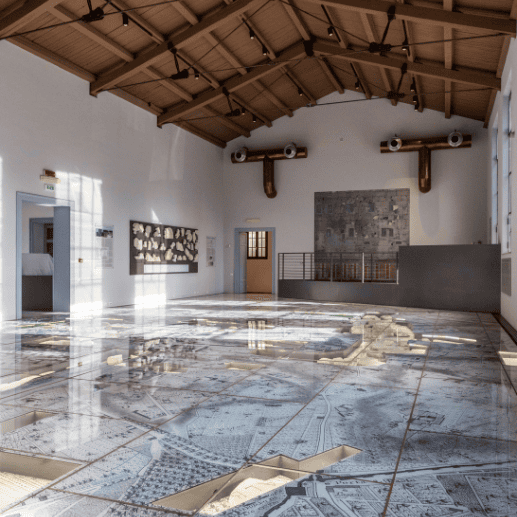
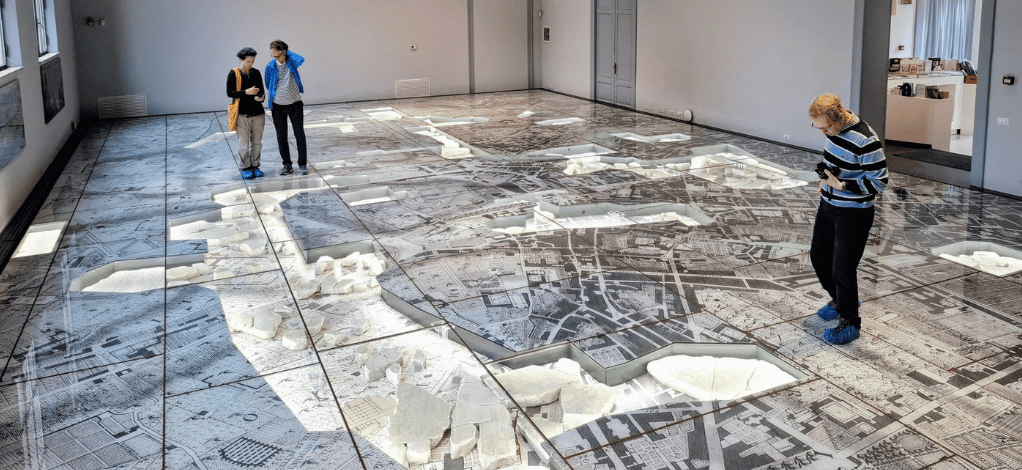
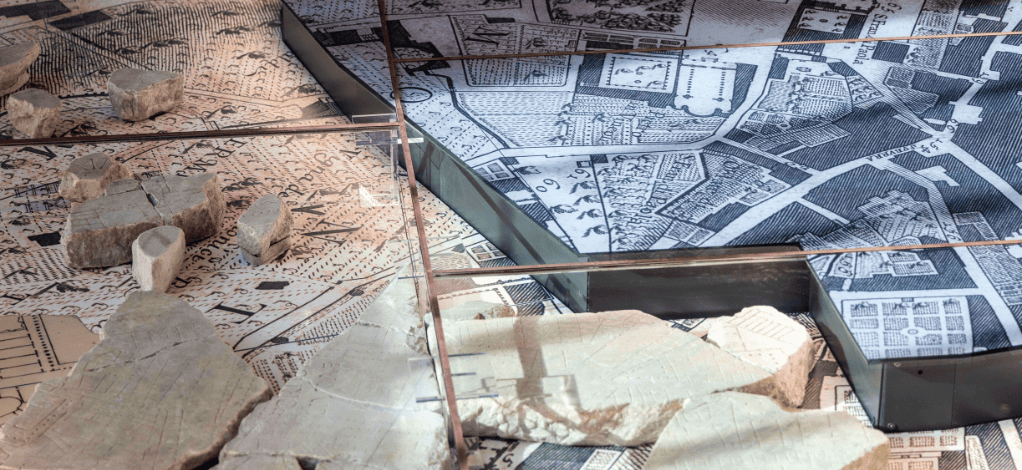
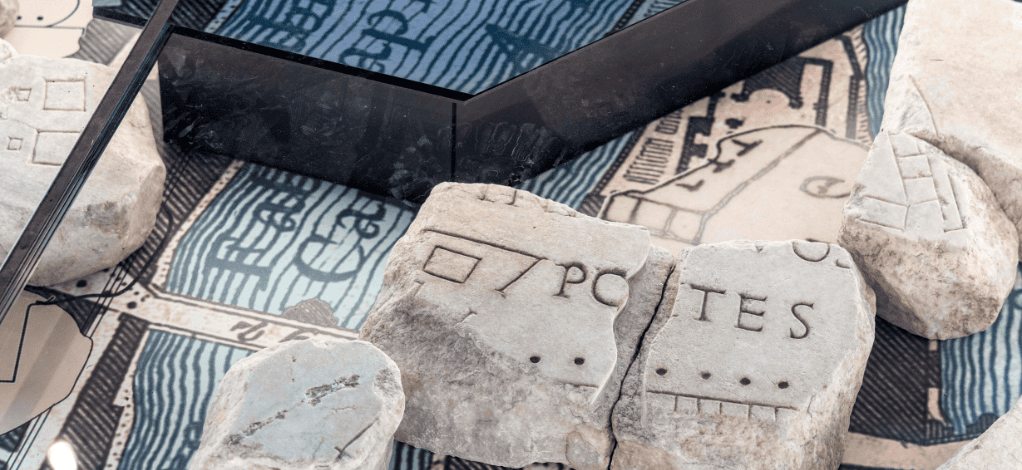
At the heart of the project is the famous Forma Urbis, the monumental 3rd-century AD map of Rome.
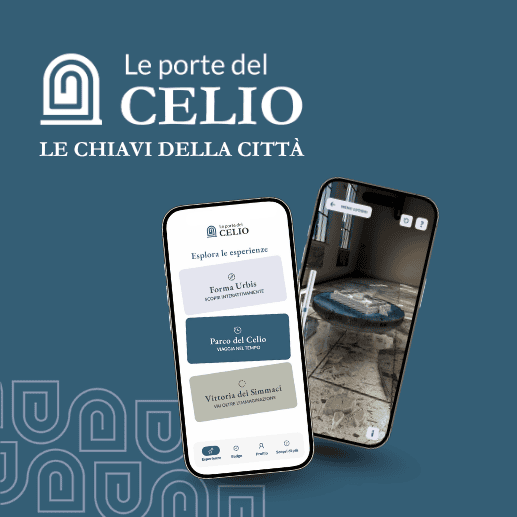
With the App “Porte del Celio”, we have turned its discovery into a participatory experience: as visitors walk on the glass floor displaying its fragments, the App uses Augmented Reality to transform the engraved lines into complete 3D buildings, triggering a digital treasure hunt based on beacons and clues.
The Victory of the Symmachi in MR
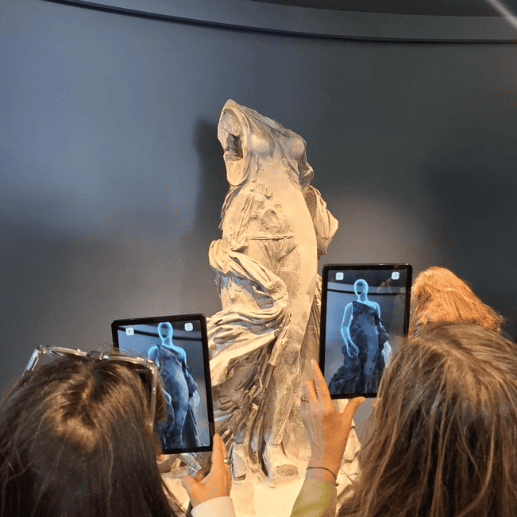
The App experience is enhanced through Mixed Reality, applied to the Victory of the Symmachi, a fragmentary sculpture from the Roman period discovered on the Caelian Hill and included in the new exhibition itinerary of the Museum of the Forma Urbis.
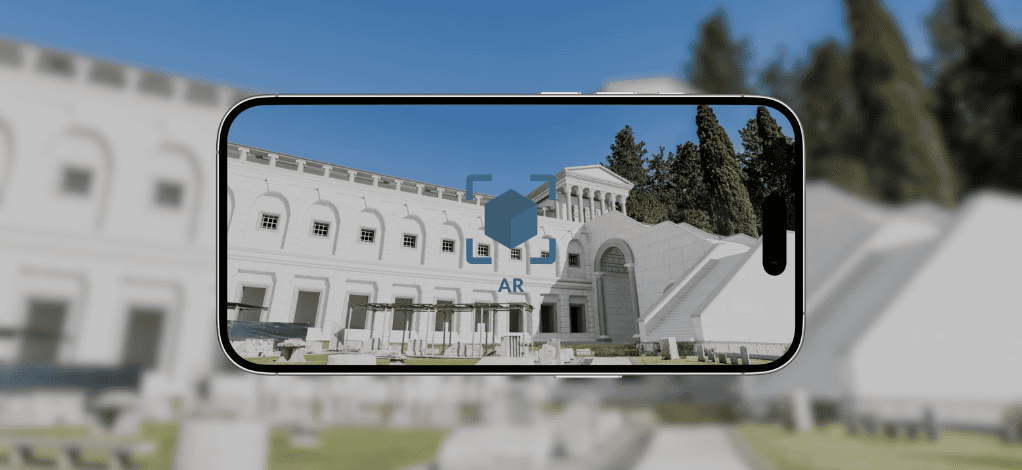
By framing the artefact, the technology reveals the work not as a fragment, but in its digitally reconstructed form.
Enhanced Outdoor Experience
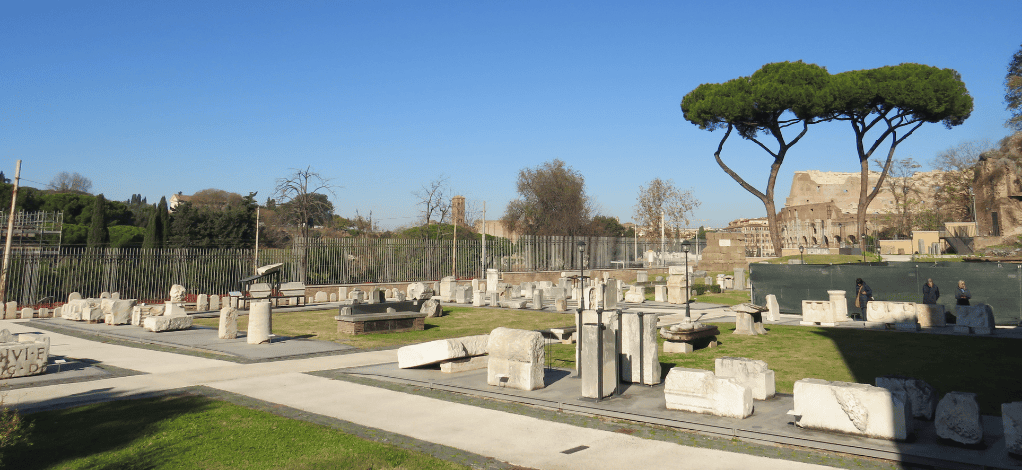
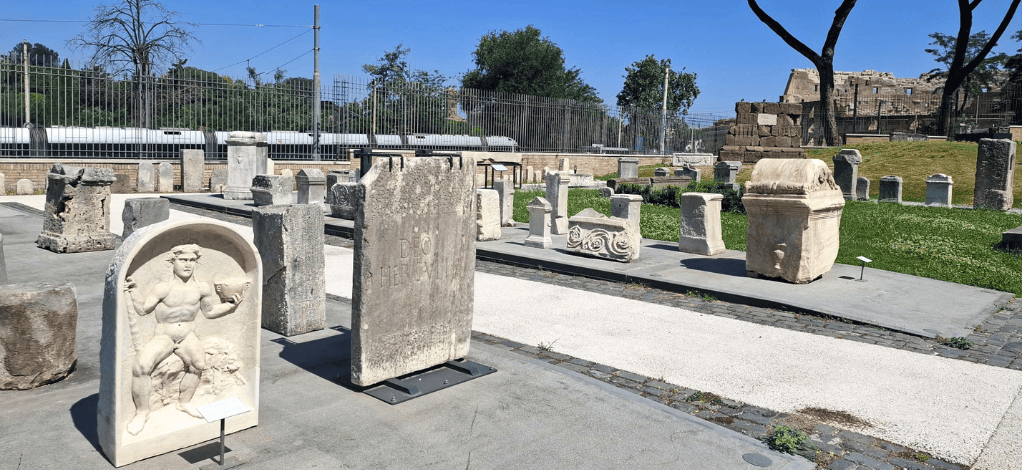
The “Le Porte del Celio” App also guides visitors through the discovery of the Caelian Archaeological Garden. Through Photospheres, 3D reconstructions of the Colosseum, the Temple of the Deified Claudius, and the Aqueduct of Nero re-emerge and blend with today’s landscape. Meanwhile, QR Codes connected to the portal unlock thematic itineraries and in-depth content about the archaeological remains found throughout the Garden, offering a fully immersive journey between history and digital technology.
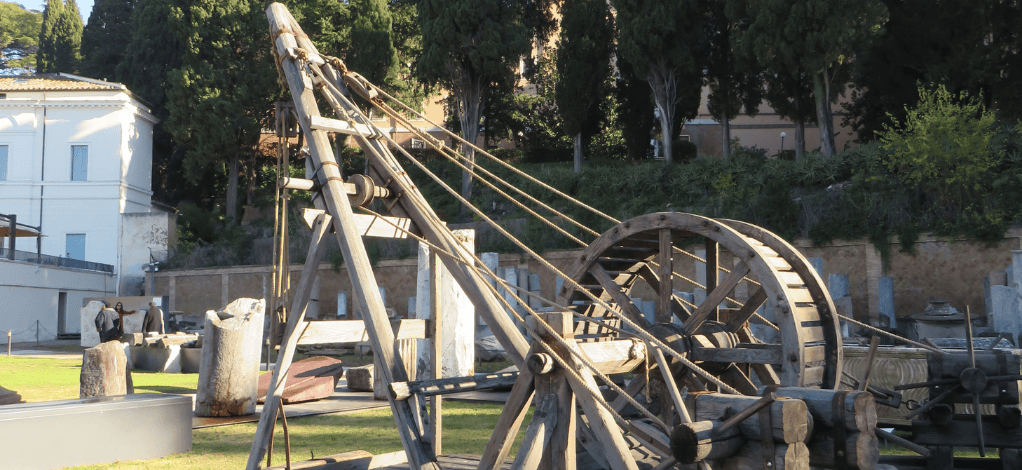
The visit to the Park concludes with the reconstruction of an authentic Roman Hoist, bringing visitors into the heart of Roman engineering. This complex lifting machine, described by Vitruvius and powered by people walking inside a human-powered wheel (calcatoria), reveals the construction techniques that made the monumental architecture of antiquity possible.
Multimedia Storytelling
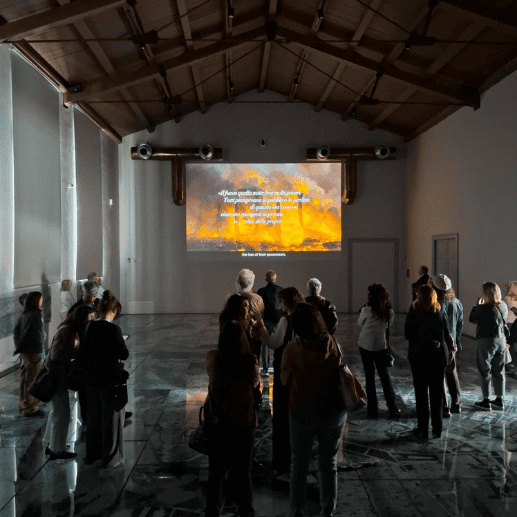
Inside the museums, multimedia content brings history to life and connects the different layers of the past. At the Museum of the Forma Urbis, a spectacular video projection, together with touchscreen displays, tells the story of the map, Imperial Rome, and Republican Rome.
In Albano Laziale, at the Museum of the Second Parthian Legion, immersive sound design and a floor projection recreate the context of ancient warfare, bringing back the sounds of tubae and cornua.
The “M. Antonacci” Civic Museum uses interactive displays to illustrate the historical transformations of Albano and its Early Christian heritage.
The “Le Porte del Celio” Portal
The Portal is at the heart of our digital infrastructure. It acts as a unified guide, accompanying visitors throughout every stage of their experience and providing immediate access to information, events, collection catalogues, and thematic itineraries.
Communication and Brand Identity
To maximize the project’s impact, we developed an integrated communication and enhancement plan, built around a strong brand identity.
In collaboration with students from the two-year Master’s Degree in Economics and Management of Cultural Heritage at Roma Tre University, we conducted a marketing research phase to define the strategic guidelines.
Targeted communication and promotional initiatives were then designed to leverage all available channels and engage a diverse range of audiences.
Let’s find out if it’s a match
contact us